The current Bundibugyo virus disease outbreak in the Democratic Republic of the Congo is still on a dangerous trajectory with containment efforts faltering. As of 4 September 2026, WHO reported 6,522 confirmed cases and 3,134 confirmed deaths in the DRC — a 48% case fatality rate [1].
Transmission remains concentrated in Ituri: 5,277 of 6,522 DRC cases (80.9%) and 2,378 of 3,134 deaths are in Ituri. Ituri also reported 53 of 86 new cases and 23 of 39 deaths on 04 September.
Mortality remains high: DRC CFR is 48.1%; daily deaths totalled 39, including 30 community deaths and 9 intra-CTE deaths. North Kivu remains high at 65.8%, while Bas-Uélé is 75.0% on a small cumulative case base.

The DRC response has faced formidable challenges including general insecurity, violence and community resistance, appalling poverty, strong distrust of authority and large-scale displacement. This has fuelled ongoing transmission and the continued expansion of the outbreak into new health zones, increasing the potential for further national and regional spread. There are several areas that must be holistically addressed to improve surveillance systems and response needed to contain the disease.
Contact tracing needs to improve
Contact tracing remains a major weakness. This means there is a significant risk of transmission to be sustained within communities. Quickly identifying and tracing the contacts of those who had come in contact with Ebola patients remains challenging across the six provinces affected.
Although 81% of contacts have been followed up with by surveillance teams, that figure does not reflect the full reality as it only refers to the listed contacts and doesn’t include those who have yet to be traced. Africa CDC estimates that cases confirmed in the last three weeks should have generated 97,600 contacts, based on an average of 60 contacts per confirmed case. Only 19% of those total expected contacts have been traced [2].
Until case detection and isolation outpace transmission, better tracing alone will not be enough alone to turn the epidemic around.

Limited community-based surveillance systems
The primary operational gap is the lack of community-based surveillance systems. Insecurity and displacement disrupt access to health care and essential services, restrict access for response teams, and impede surveillance, case investigation and contact follow-up. Overcrowding, limited water, sanitation and hygiene services, and restricted access to healthcare in mining communities, informal settlements and sites for internally displaced people further hinder early detection, infection prevention, and appropriate care.
The affected areas are vast, remote and, in many places, insecure. Short journeys can take a day or even more on bad roads, particularly during the rainy season. There needs to be mobile molecular testing capabilities that can be rapidly deployed to these affected areas. This starts with proactive community-based surveillance to detect early indications and cases of disease transmission where they originate – to include disease vectors and natural reservoirs.

Community engagement and trust
Often overlooked is the criticality of community engagement and trust in containing disease outbreaks. It is a foundational element that enables response operations to succeed and helps communities protect themselves during times of crisis.
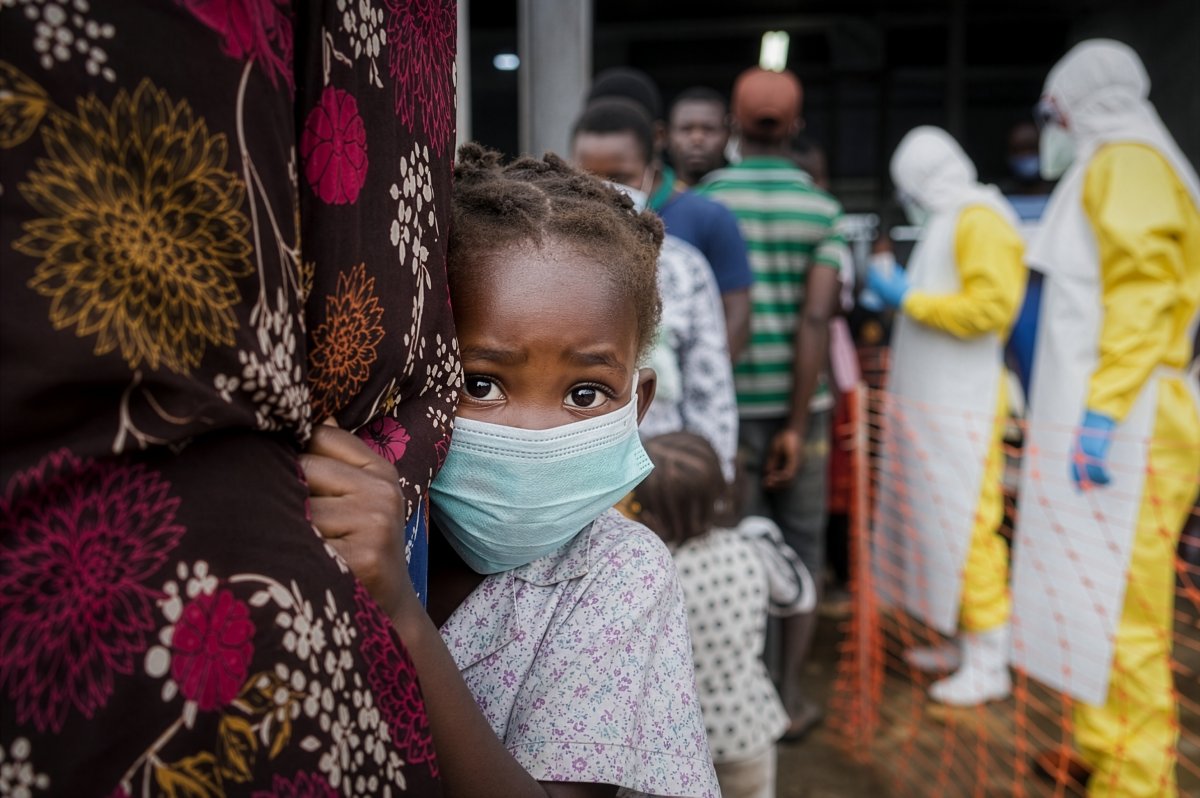
Many affected health zones are in areas where cases go undetected or unreported for several reasons, including distrust in health authorities. Misinformation can quickly spread amongst communities and fuel resistance to health interventions. The Ituri province, where the outbreak is concentrated, is also at the centre of the rebel conflict in eastern Congo, complicating efforts to gain trust from residents. A halt in conflict is critical to enable frontline teams to reach affected communities.
The early deployment of community engagement and protection teams establishes trust and a 2-way dialogue that enables residents to ask questions, express concerns and access accurate information. Trusted community leaders also play a significant role in building confidence, addressing rumours, early reporting and encouraging collaboration with health authorities. Their presence, alongside response teams, help to stabilise communities during decisive phases of disease outbreaks and strengthen public confidence in response efforts [3].
Rebuilding community trust has to be central to the outbreak response.

Misinformation
Violence against healthcare workers and facilities are impeding containment efforts. Attacks are often caused by misinformation and false claims circulating in affected areas - these include allegations that Ebola doesn't exist, that health workers are deliberately infecting people or harvesting their organs, and that the Ebola response is a money-making scheme. Many communities think that treatment centres are places where, when you go, you die [4] - because of this, more than two-thirds of Ebola deaths have occurred at home [5].
Burials have further exacerbated this problem; making safe burials is a key way of limiting further spread of the disease. The virus continues to be extremely active and contagious in the body, even after death. Ebola burial teams have been attacked by community members who haven’t understood or been adequately included in the funeral process. In late May, rioters set fire to equipment and two isolation tents at an Ebola treatment centre in Rwampara after relatives of a young man believed to have died from the virus were prevented from taking his body away for burial [5]. This violence was due to misunderstandings of public health practices such as isolation and safe burials. These safe practices were perceived as separation with the beloved deceased, denial of human touch at the point of death, and replacement of traditional funeral rites by safe burials while these rites are considered of high importance in the cultural and social context of the region [6]. Communities need to be educated on the importance of allowing loved ones to be buried in a safe but dignified manner.
Community resistance fuelled by misinformation is a real problem; without being accepted by communities healthcare workers and officials cannot do their work. Misinformation is undermining their efforts and must be corrected; however this requires a collaborative relationship with communities and a base level of trust to first be established.
"Ebola misinformation is Ebola's greatest ally," Dr Wessam Mankoula from the Africa Centres for Disease Control.

Cases are not being detected early enough
Since the outbreak laboratory capacity has expanded dramatically, with 22 laboratories operating across the five affected provinces. Before there was only one in Kinshasa with the capacity to detect Bundibugyo. This has helped reduce turnaround time between sample collection and result, from over a week to hours [7]. However transportation and sample processing times cause delays in detection, these delays cost lives.
At least 78% of all alerts are reported from health facilities, demonstrating that most infected individuals present themselves to health facilities only after their condition has deteriorated. While health facilities play an essential role in case detection, they should not be the primary source of new cases during a mature outbreak response. Waiting for symptomatic patients to seek care allows transmission chains to continue undetected within communities [8]. This underscores the need to bring surveillance, testing, treatment, vaccination and community engagement closer to the village level.

How CENOS™ can change the trajectory of the outbreak
CENOS™ complements existing labs, vaccination programs, and lateral flow tools — but it closes the remaining operational gap of delivering rapid, lab-grade molecular results at the Point-of-Decision in decentralised settings helping to accelerate efforts to contain the outbreak. Containment must begin where the outbreak starts.

The portable 2.76 kg CENOS™ Analyser performs extraction-free RT-qPCR directly from crude samples, with rapid Peltier thermal cycling at >8°C/s, spectrometer-based fluorescence detection, differential analysis, onboard processing and automated result generation. The workflow is designed for non-expert operation and a crude-sample-to-result time of just 30 minutes.

This step change of integrating molecular testing capacity directly into communities has the potential to rebuild trust and educate populations on the benefit of outbreak preparedness and response efforts. People are more proactive, trusting and receptive to testing efforts if they can be readily accessed locally in their community instead of having to travel to centralised testing facilities. This strengthens response and improves equity in underserved or remote communities. CENOS™ provides actionable results whilst the patient waits directly involving them in the triaging and decision-making process providing greater transparency and understanding.
The Ebola outbreak can be brought under control but only through scaled-up action in affected communities using a village-centred approach to improve diagnostic capacity, rebuild trust and correct misinformation. Resources, coordination and technical capacity must come together in unison.
“The choices we make now will determine how quickly we can bring this outbreak under control, protect and save lives,” - Dr Mohamed Janabi, WHO Regional Director for Africa.

References
[1] Africa CDC, Aragaw, D.M., Cho, W.N., Mercy, K. and Bethlehem Tibebu (2026). Bundibugyo Virus Disease Outbreak Situational Report September 4, 2026. [online] Africa Health Knowledge Hub. Available at: https://khub.africacdc.org/records/resource/bundibugyo-virus-disease-outbreak-situational-report-september-4-2026 [Accessed 10 Sept. 2026].
[2] Chinedu Asadu (2026). 5 challenges Congo faces in containing its fast-moving Ebola outbreak. [online] The Independent. Available at: https://www.independent.co.uk/news/ebola-congo-west-africa-nigeria-abuja-b3044400.html [Accessed 10 Sept. 2026].
[3] WHO | Regional Office for Africa. (2026). Why community trust is critical to health emergency response. [online] Available at: https://www.afro.who.int/countries/democratic-republic-congo/news/why-community-trust-critical-health-emergency-response [Accessed 10 Sept. 2026].
[4] Silva, M. and Mwai, P. (2026). Ebola misinformation is fuelling attacks on health workers in DR Congo. BBC News. [online] 9 July. Available at: https://www.bbc.co.uk/news/articles/c79yj09nd4qo [Accessed 10 Sept. 2026].
[5] Cook, T. (2026). Slowing the Spread of Ebola in the DRC with Safe and Dignified Burials | International Medical Corps. [online] International Medical Corps. Available at: https://internationalmedicalcorps.org/story/slowing-the-spread-of-ebola-in-the-drc-with-safe-and-dignified-burials/ [Accessed 10 Sept. 2026].
[6] Sikakulya, F.K., Ilumbulumbu, M.K., Djuma, S.F., Bunduki, G.K., Sivulyamwenge, A.K. and Jones, M.K. (2021). Safe and dignified burial of a deceased from a highly contagious infectious disease ebolavirus: Socio-cultural and anthropological implications in the Eastern DR Congo. One Health, [online] Available at: Safe and dignified burial of a deceased from a highly contagious infectious disease ebolavirus: Socio-cultural and anthropological implications in the Eastern DR Congo - ScienceDirect 13, p.100309. doi:10.1016/j.onehlt.2021.100309.
[7] Boum, Y. and Belizaire, M. (2026). DRC’s Ebola epidemic could be the worst in history: 4 things that could help end it. [online] Avaliable at: DRC’s Ebola epidemic could be the worst in history: 4 things that could help end it [Accessed 10 Sept. 2026].
[8] Ngongo, N., Boum, Y., Belizaire, MR. et al. (2026) Community engagement should be the priority for containment of the Bundibugyo Ebola outbreak. Nat. Health [online] Available at: https://doi.org/10.1038/s44360-026-00172-4 [Accessed 10 Sept. 2026].