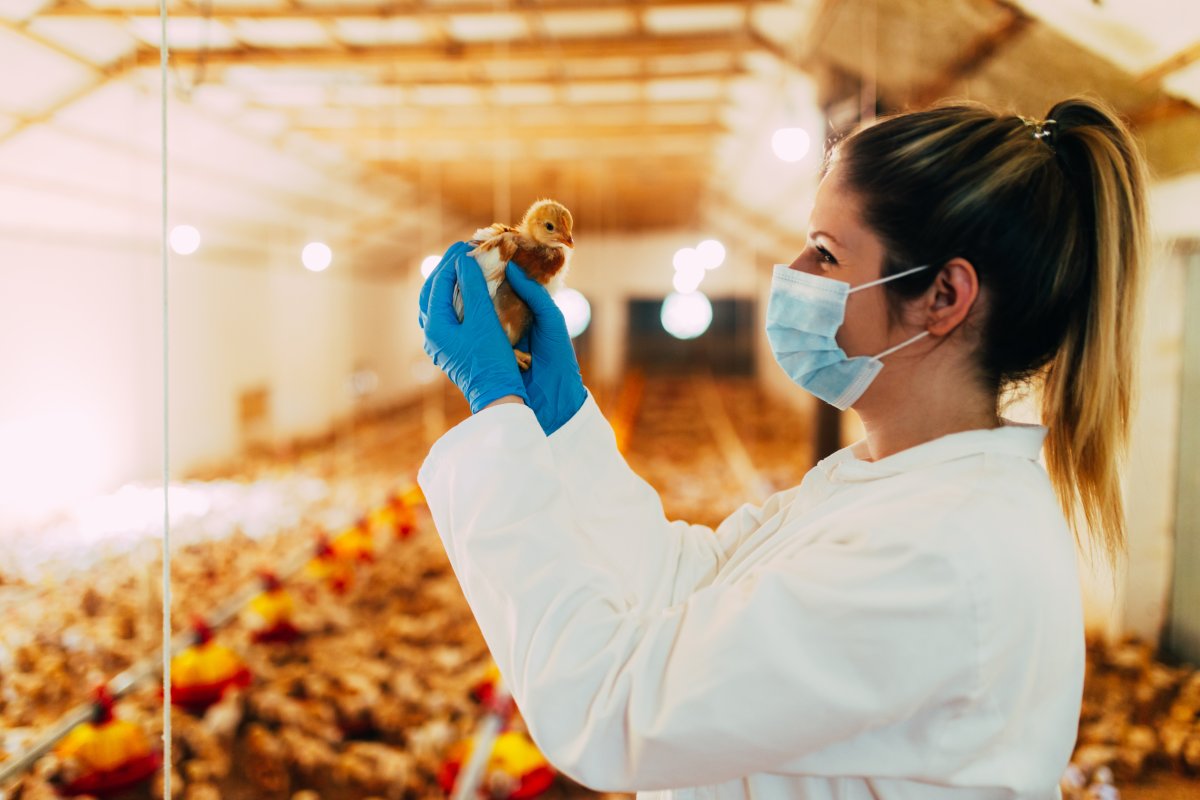
As Avian Influenza continues to place significant global pressure on poultry, wildlife surveillance and animal-health systems, the speed at which reliable molecular information and data can reach the people making disease-control decisions becomes increasingly important.
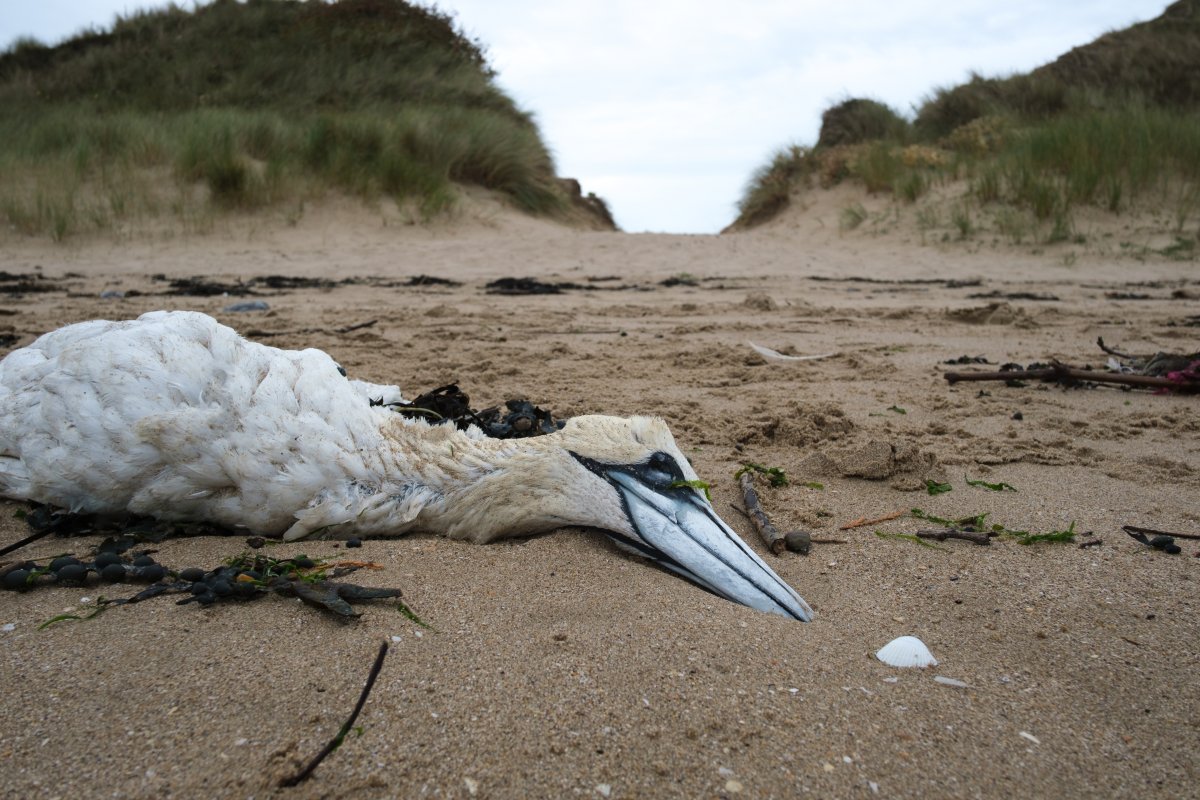
BIOGENE is pleased to share a new pre-print arising from our collaborative work with Professor Ashley Banyard and the team at the Animal and Plant Health Agency (APHA), Weybridge, funded by Innovate UK. APHA Weybridge is the UK National Reference Laboratory for Avian Influenza and Newcastle Disease; hosting international reference-laboratory expertise for these diseases.
The pre-print is available here: https://www.biorxiv.org/cgi/content/short/2026.08.11.744268v1
The work addresses a fundamental question: can RT-qPCR be moved closer to where samples are collected, while removing the conventional nucleic-acid extraction step and retaining meaningful performance against established reference methods?
Operational Impact of the CENOS™ Platform
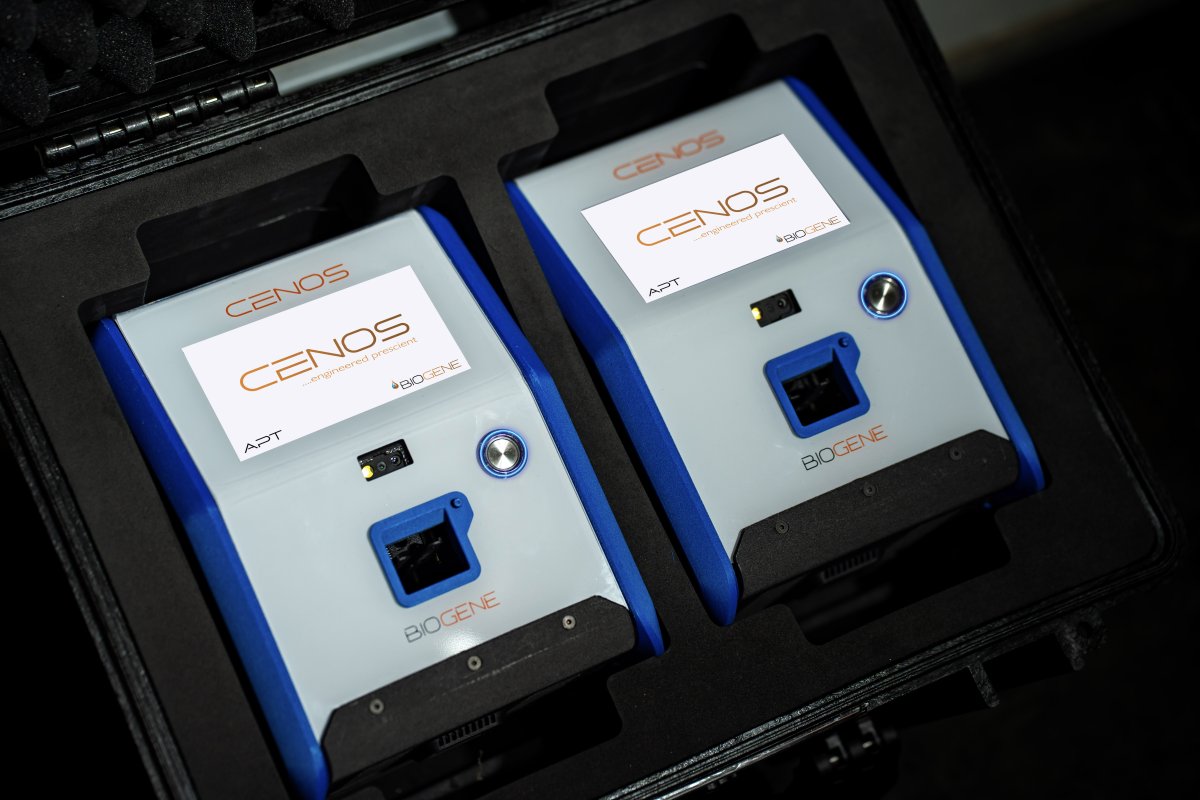
The results demonstrate the empirical output of the CENOS™ platform for AIV/HPAIV surveillance and APMV-1/Newcastle Disease Virus testing, with several important operational features:
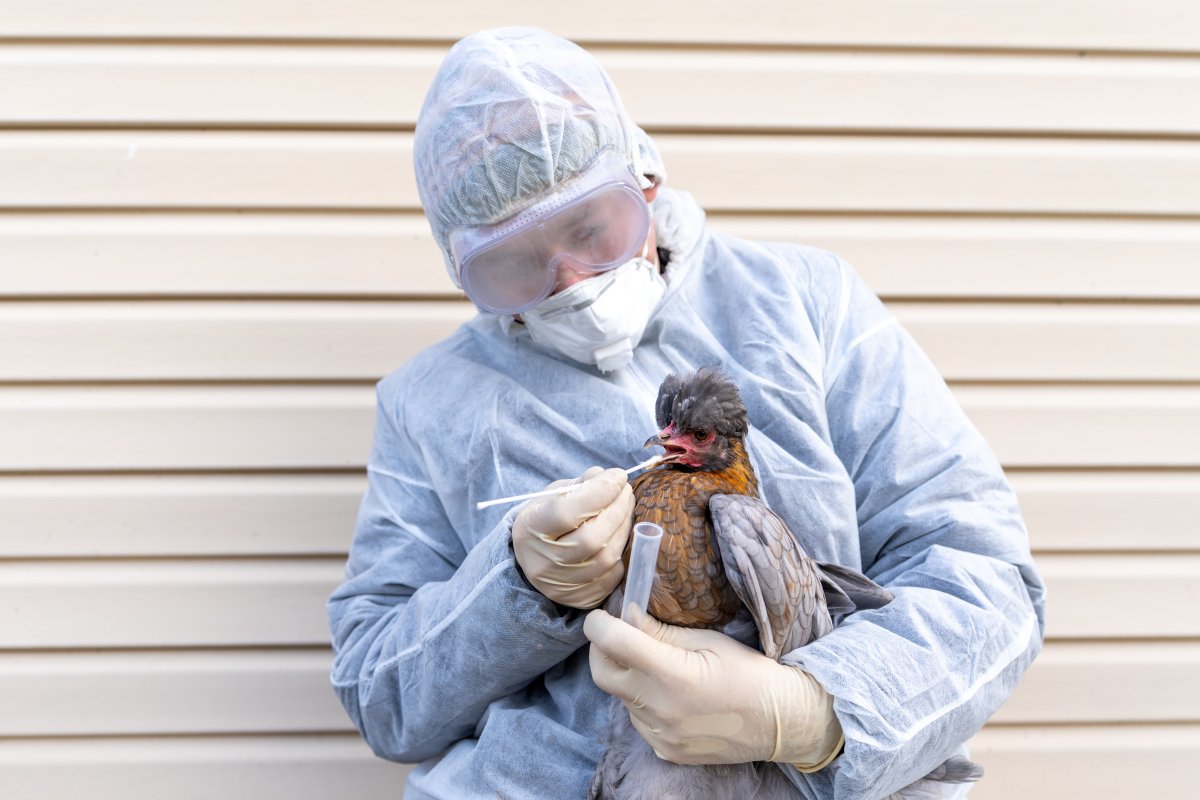
- Direct RT-qPCR from crude avian material, including faecal/cloacal and swab samples.
- No conventional nucleic-acid extraction workflow prior to amplification.
- Molecular results in approximately 30 minutes.
- Comparison against established APHA reference RT-qPCR methods.
- AIV and NDV capability available through the same portable molecular platform.
- A compact, low-power analyser designed to allow molecular testing to move beyond conventional central laboratory infrastructure.
- Evaluation of pooled sampling approaches, with potential implications for more practical and economical flock-level surveillance.
The Step Change
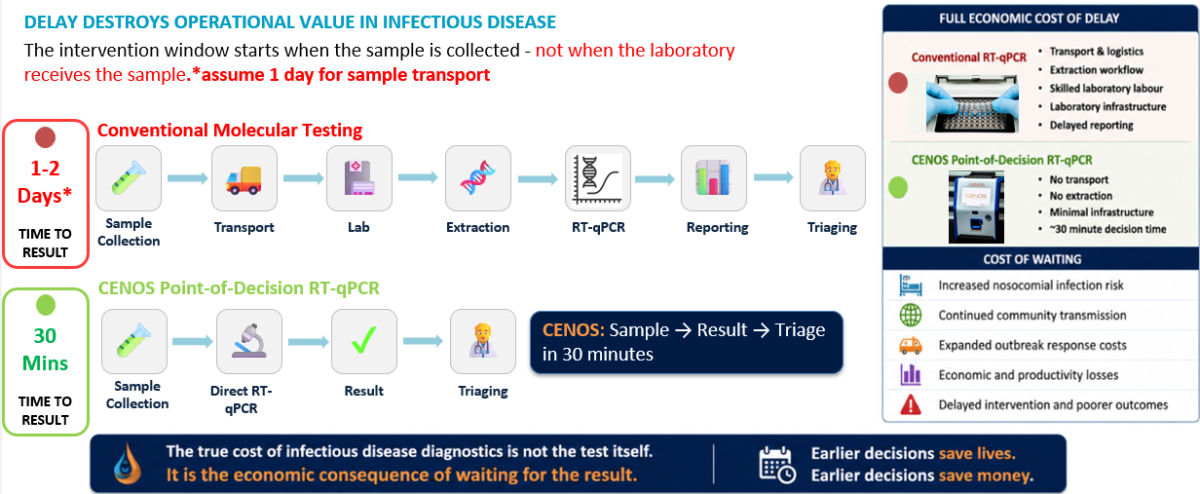
The significance is not simply the rapid sample to result time. It is having the capability of performing extraction-free (direct from sample) RT-qPCR at the Point-of-Decision providing localised and actionable results. This is a fundamentally different deployment model from conventional laboratory molecular testing.
This step change, has important implications for on-farm surveillance, outbreak investigation, wildlife monitoring and geographically distributed testing, particularly where transportation and laboratory processing introduce delays.
Flexible Sampling
Faecal and environmental sampling are also particularly relevant to Avian surveillance. Where epidemiologically appropriate, these approaches can reduce the need to individually catch and handle birds, simplifying sampling and reducing unnecessary biosecurity interactions between personnel and flocks.
Pooled sampling may also offer a further opportunity. If several birds can be screened within a single molecular test while maintaining appropriate analytical performance, the economics and practicality of proactive flock surveillance begin to improve substantially.
Revolutionising Notifiable Avian Disease Diagnostics
We believe ongoing collaboration work with APHA and deployment of the CENOS™ platform technology will facilitate achieving a true paradigm shift in molecular surveillance.
Not away from reference laboratories — their role in confirmation, sequencing, virus characterisation, subtyping, pathotyping and epidemiological investigation remains essential.
Rather, it is about extending molecular capability outwards from the reference laboratory, allowing an earlier molecular result to be generated closer to the animal, flock or surveillance location - exactly where the decision needs to be made without delay.
We would particularly like to acknowledge Professor Ashley Banyard and the APHA Weybridge team for the scientific rigour, collaboration and critical evaluation that have enabled this work to progress.
Disclaimer
Performance data generated through an Innovate UK funded research project, involving the Animal & Plant Health Agency (APHA), demonstrate the rapid molecular detection capability of the CENOS platform under defined study conditions. The participating institutions do not endorse the product.